Most property managers across Ohio have tried something before calling in a professional: a scarecrow, some mylar tape, maybe a pop gun near the pond. None of it holds up for long, because none of it behaves like an actual threat. Geese Chasers™ Ohio uses trained Border Collies instead, dogs that move, stalk, and posture the way a real predator would, to convince resident Canada geese that a property isn’t worth staying on. Here’s what the service involves, and what nesting-season rules apply along the way.
Why Scarecrows, Noisemakers, and Chemicals Don’t Work Long Term
Canada geese are intelligent birds, and they’re quick to tell the difference between a real threat and a static object. Scarecrows, mylar tape, and balloons stop registering as danger within days once nothing about them changes. Pop guns and noisemakers startle a flock briefly, but the geese return the moment the sound stops. Chemical turf treatments can make one stretch of grass less appealing to feed on, but they don’t address the rest of the property or an established nesting site. None of these control methods react to the geese the way a live predator does, which is exactly why flocks stop responding to them over time.
The Border Collie Method: Predator Instinct Without Harm
Border Collies were bred by shepherds in the border country between Scotland and England, starting in the 1700s, to stalk and herd livestock. That same instinct applies to geese: the dog crouches, stalks, and holds a low, wolf-like gaze that geese read as an active predator rather than a prop. The dogs never make physical contact with a goose, a person, or a pet; the method works entirely through presence and instinct. Off duty, these are famously trainable, social dogs, which is part of why handlers can direct their behavior so precisely on-site.
What Happens on Your Property, Step by Step
- Free property assessment to review flock size and roosting areas.
- Randomized daily visits begin, timed unpredictably so geese can’t anticipate them.
- Repeated pressure builds over several weeks as the same signal is reinforced.
- Flock relocation typically completes within 4 to 12 weeks of initial clearing.
- Transition to a Maintenance program or an On-Call program, depending on the property.
- Night runs are scheduled if roosting droppings turn up after hours.
Nesting Season Rules You Need to Know
Nesting season runs from March through the end of June. When a nest is found before hatching, a state and federal egg addling permit allows treated eggs to be addled, which halts development, within the first 7 to 10 days after laying, given the roughly 28-day gestation window; the parent geese then typically abandon the nest.
Once goslings hatch, federal law prohibits harming or removing them, and the family stays on-site for about 70 to 90 days until the goslings can fly. Since Canada geese are monogamous and long lived, a flock that raises young successfully on a property tends to come back to that same spot the following year, which is why acting on a nest early in the season matters most.
Frequently Asked Questions
What does geese control cost in Ohio?
Pricing depends on property size and how established the flock is. A free evaluation comes first, then a quote specific to the property.
How long does the initial clearing take?
Most Ohio properties clear within 4 to 12 weeks, depending on flock size and site layout.
Will the Border Collies hurt the geese?
No. They herd and chase; there’s no physical contact with a goose at any point.
What counties does Geese Chasers™ Ohio serve?
The service area spans more than 30 counties across Northeast and Central Ohio, including Cuyahoga, Franklin, and Summit.
Can nests or eggs be removed anytime?
No. Addling is only allowed within a specific early window, and hatched goslings are protected under federal law.
I already tried noisemakers and fencing. Why keep coming back?
Static deterrents don’t adapt or move, so geese adjust to them quickly. A live, unpredictable presence is what keeps the pressure effective.
Why Choose Geese Chasers™ Ohio
- Locally operated by franchise owner Jason Helfer, covering both the Greater Cleveland and Greater Columbus areas.
- Service area spans more than 30 Ohio counties, from Cuyahoga and Summit to Franklin and Licking.
- Free property evaluation before any service agreement is signed.
- Daily, multi-visit clearing schedule during the initial phase, seven days a week.
- On-call route changes made directly by a regional manager as new sightings come in.
- Backed by the wider Geese Chasers™ network’s long-running experience in goose management.
Geese Chasers™ Ohio, led by franchise owner Jason Helfer, serves commercial, residential, and municipal properties across Northeast and Central Ohio using this Border Collie method.
Ready for a free property evaluation?
Cleveland area: 440-664-6673. Columbus area: 614-664-6673. Toll free: 833-644-3373.
You can contact us online.
Advice is always free.
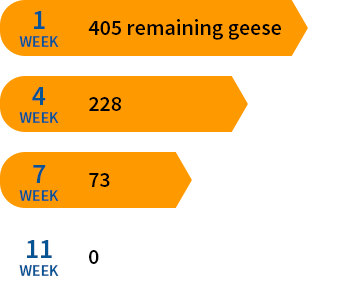
Geese Chasers™ Case Study
Geese cleared over 11-week program